Core interpretation

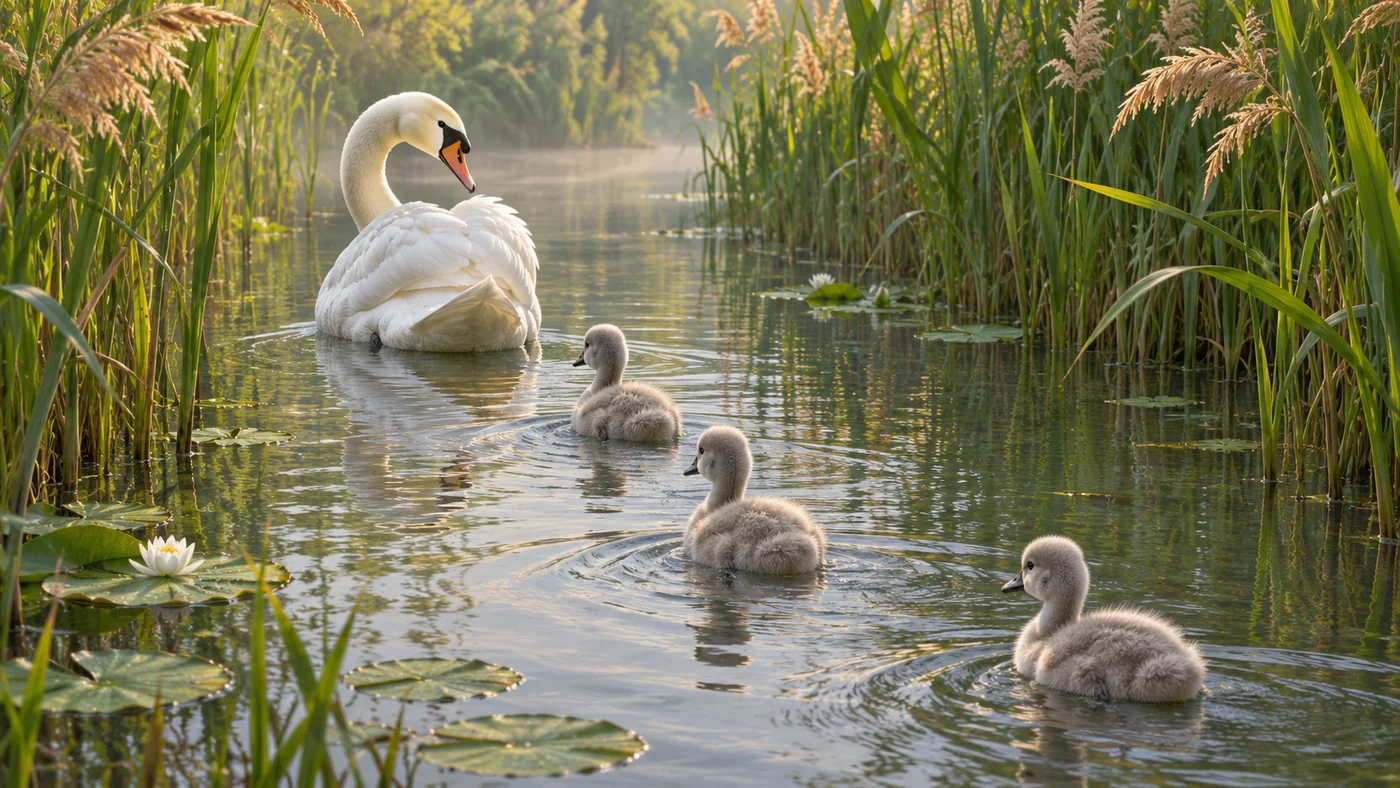
A white swan moves along a narrow channel. Grey cygnets follow, but the last one drifts toward a gap in the reeds. The adult turns rather than continuing out of sight. The water is quiet, although the tall stems hide where the channel leads.
The scene offers a way to think about guiding without assuming that moving fastest is the same as helping. If you are teaching, caring, or coordinating, notice whether you regard every pause as lost time. Waiting within sight gives the young bird a reference point without doing all its swimming. That differs from withdrawing guidance altogether. The distance between the birds matters more than an abstract claim that swans always represent family.
Whose pace am I waiting for? How could I make the direction clear while leaving room for an independent attempt?
The symbols
The reeds create a setting where the next few feet are visible but the whole route is not. A narrow channel can resemble a limited set of practical options. The young birds may bring to mind an inexperienced part of a project, a relationship, or yourself. None of these associations proves that the dream concerns an actual child.
Your feelings
Warmth may connect with a wish to respect different learning speeds. Anxiety may reflect the burden of believing you must get everyone safely through every difficulty. Irritation at the straying bird can also be useful information about fatigue rather than evidence that you are uncaring.
A constructive reading
In a shared task, ask what information someone needs before you repeat the same instruction. Agree on a meeting point or a simple check-in signal. Such practical structure can allow independence while reducing the pressure on the person who usually watches the group.
Questions worth reflecting on
The dream does not predict danger to relatives or colleagues. Protection can become close surveillance, and patience does not require one person to remain endlessly available. Include your own need for help when considering the scene.