Core interpretation
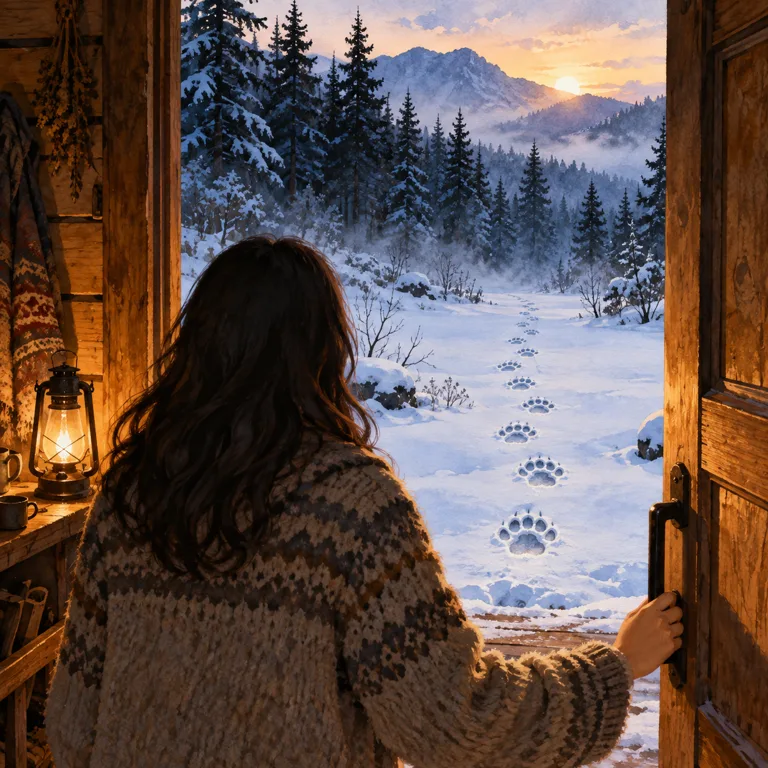
You open a door and find tiger paw prints crossing fresh snow. The animal is nowhere in sight. That absence is what makes this scene different from a chase or an encounter: you know only that a trace is present. The dream does not predict a visitor or a danger. It may be more useful to ask how you feel when you notice evidence of a change without knowing its source. The doorway separates a familiar interior from a landscape you have not explored. A recent snowy walk, a wildlife image, or a story about animals could also have supplied the materials for the dream.
Which way did the prints lead? Tracks approaching the house may bring up questions about what you welcome into your private space. Tracks moving toward the woods may feel like evidence of something that has already passed. Neither direction has a fixed meaning. Did you close the door, call someone over, follow the marks, or simply watch? The choice you made in the dream gives the image a more personal shape than the word “tiger” alone. Notice whether the path was clear and continuous or vanished beneath new snow.
The symbols
Fresh snow records movement that would be harder to notice on bare ground. In this scene the visible tracks, rather than the unseen tiger, draw your attention. A single line of prints may feel easier to follow than a confusing cluster of marks. Standing at the threshold can also matter: were you protected inside, ready to step out, or caught between those positions? These are ways to describe the dream more precisely, not rules for decoding symbols. Your own experiences with winter, wildlife, and home belong in the interpretation.
Your feelings
Surprise and beauty can coexist if the marks look striking against untouched snow. If you felt afraid, ask whether the fear came from the tracks themselves or from imagining where the unseen tiger might be. If you felt calm, perhaps you observed the scene as part of a larger landscape. The feeling after waking may differ from the feeling at the doorway. Writing down both can reveal how your view of the scene changed once you were awake.
A constructive reading
One practical reflection is to separate what you observed from what you inferred. In the dream you saw snow and tracks; you did not necessarily see the animal, know where it went, or know what it intended. When everyday information is incomplete, that same distinction can help you pause before drawing conclusions. You might ask a question, look for another detail, or allow uncertainty to remain. The dream gives no instruction to investigate a real threat and makes no claim about the future.
Questions worth reflecting on
Whose door was it? Had the snow just fallen? Were the prints large, close together, or partly covered? Did you show them to anyone? Was the path into the forest familiar? Consider whether the strongest part of the dream was the pattern in the snow or the idea of a tiger you could not see. Those details make this your particular scene rather than a generic tiger dream.